Challenge
Consultants needed to locate the right artifacts quickly, but inconsistent taxonomy and workflow friction slowed decision-making.
Featured Case Lens
Explore how I framed the problem, prioritized decisions, and measured confidence in the final UX direction.
Problem Space
Consulting teams were losing momentum to taxonomy friction and unclear content pathways.
Challenge
Consultants needed to locate the right artifacts quickly, but inconsistent taxonomy and workflow friction slowed decision-making.
Approach
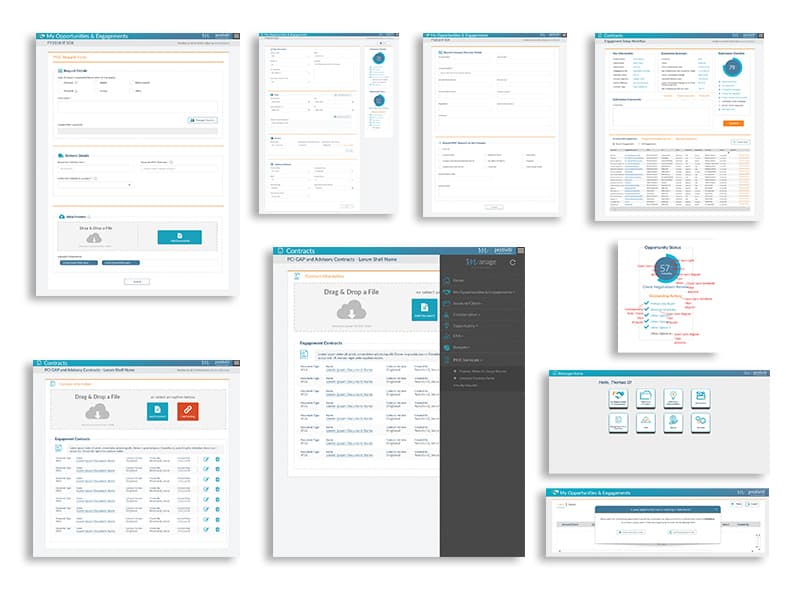
I mapped high-frequency workflows, simplified navigation patterns, and iterated interactive prototypes with cross-functional partners before handoff.
Outcome
The redesigned experience reduced hunting behavior, improved internal adoption confidence, and aligned design intent with implementation realities.
Interactive Example
Slide to compare this project against a prior-state visual reference. This module demonstrates how Jesse presents UX impact in a narrative format stakeholders can absorb quickly.
Extended Narrative
Protiviti teams needed to find, evaluate, and act on internal knowledge artifacts quickly. The current experience made this harder than it should have been, especially when consultants were under delivery pressure.
The redesign focused on fewer dead ends, clearer content signals, and faster orientation when users landed deep in the system. Instead of forcing users to learn the structure, the structure adapted to user intent.
The final direction improved internal findability confidence and created a more implementation-ready UX model for cross-functional teams.
Execution Timeline
Clarify goals, stakeholder constraints, and user priorities through focused workshops.
Create journey flows, wireframes, and information structure that reduce decision friction.
Iterate prototypes with feedback loops to improve usability and confidence before build.
Support implementation and QA so the final experience preserves intent and quality.
Next Case Story
I designed a healthcare-oriented UX experience for Hillrom Medical - ECP Project that improves clarity in complex, high-consequence workflows.